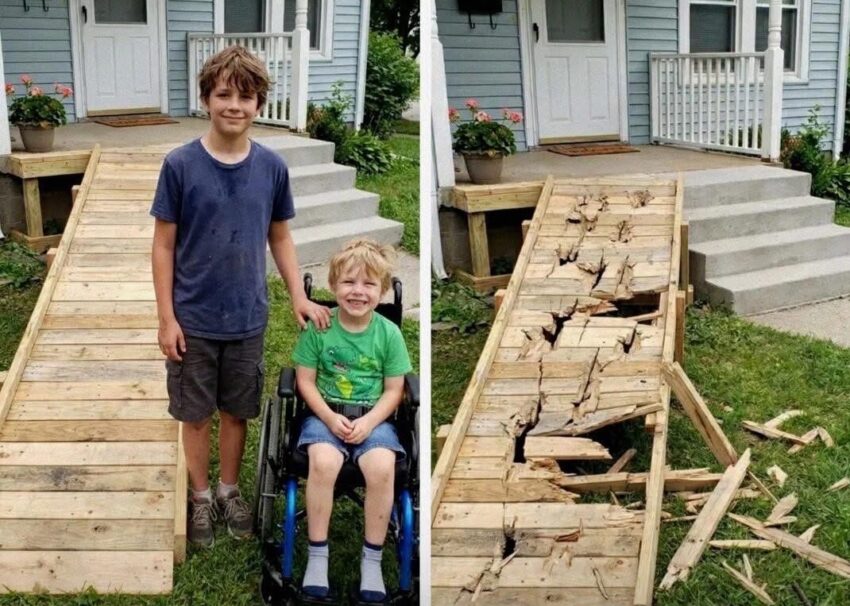
I thought it was just another ordinary afternoon—the kind that disappears into the blur of groceries, homework, and trying to make it through one more day.
I was wrong.
My son Ethan is twelve, and he has this way of noticing things other people step around. If something feels wrong to him, he doesn’t just shrug and move on. He stops. He looks. He asks.That’s how all of this started.
Across the street lives a little boy named Caleb. He’s nine, quiet, thoughtful, and almost always sitting on the front porch in his wheelchair, watching the neighborhood like it’s a world happening just out of reach. The other kids raced bikes, chased each other, shouted across lawns—but Caleb stayed in the same spot, hands resting on his wheels, eyes following everything.
I had seen him there plenty of times.Ethan was the one who really saw him.
One afternoon, while we were unloading groceries from the car, Ethan stopped halfway up the walkway and looked across the street.
“Mom,” he asked, “why does Caleb never come down?”
I followed his gaze and caught the expression on Caleb’s face. Not anger. Not even envy exactly. Just that quiet sadness children wear when they’ve gotten used to being left out.
“I don’t know,” I said. “But we can go ask later, if you want.”
That was all Ethan needed.
That evening, we walked over and knocked on the door. Caleb’s mother, Renee, answered. She looked kind, but tired in a way that told me she was carrying more than she let show.