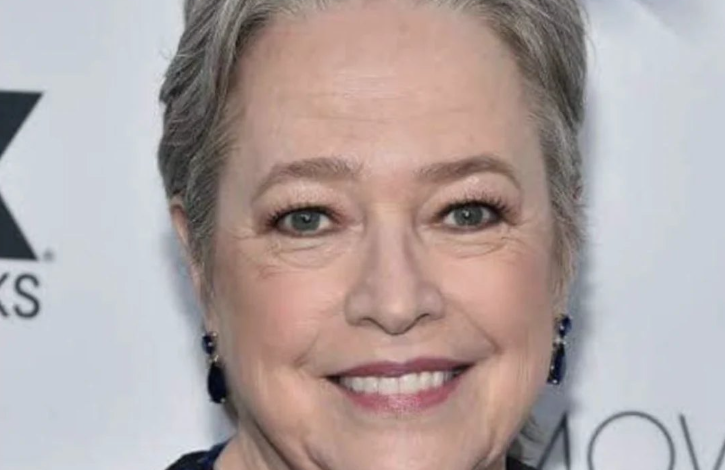
Kathy Bates has never been someone who backs down from difficult roles, whether on screen or in real life. Long before she became a symbol of resilience for millions, she was already quietly fighting a battle that few people knew about. In 2003, at the height of her career, Bates was diagnosed with ovarian cancer—a diagnosis that would have shaken anyone, let alone someone constantly in the public eye.
Instead of turning her illness into headlines, she chose silence. She told only a handful of people and continued working while enduring invasive surgery followed by nine months of aggressive chemotherapy. It was physically brutal and emotionally draining, but she pushed through it with the same grit that defined her acting career. Later, she admitted that the experience took an enormous toll, yet she deliberately kept it private because she didn’t want to be seen as fragile or pitied. At the time, survival—not sympathy—was the priority.
Her determination paid off. By 2012, Bates revealed that she had been cancer-free for nine years. It felt like a hard-earned victory, one she believed she had truly conquered. For many, that chapter would have marked the end of the story. For her, it was only an intermission.
A few weeks after publicly acknowledging her long remission, Bates received another devastating diagnosis—this time, breast cancer. The news hit her with a different kind of fear. She later described the moment as being thrust into a room more terrifying than anything imagined on American Horror Story, a show she knew well. Despite her previous experience with cancer, the shock was profound. Cancer had returned, and once again, it was demanding a fight.
Unlike her earlier diagnosis, this one did not entirely surprise her. Breast cancer ran in her family, and she had long been aware of the genetic shadow hanging over her. Still, knowledge doesn’t soften the blow when fear becomes personal. This time, Bates made a decisive choice: a double mastectomy. It was a drastic but calculated decision, aimed at stopping the disease in its tracks and giving her the best possible chance at survival.
Even in the middle of physical pain and emotional upheaval, Bates never lost her sharp wit or sense of perspective. She cracked jokes about the experience, once quipping that she missed her TV show Harry’s Law more than she missed her breasts. The humor wasn’t denial—it was defiance. She refused to let cancer strip her of her identity, her voice, or her spirit.
The surgery was successful, and Bates emerged cancer-free once again. But survival came with lasting consequences. Because lymph nodes were removed during treatment, she developed lymphedema, a chronic condition that causes swelling, pain, and limited mobility. Roughly 30 percent of breast cancer survivors face this condition, yet it remains poorly understood and rarely discussed. For Bates, it became another daily challenge layered onto an already exhausting journey.
Instead of retreating, she spoke up. She openly shared how lymphedema affects her life, from discomfort and swelling to the frustration of managing a condition that has no cure. It would have been easy to stay quiet, but silence had already cost too many people awareness and support. Bates decided she wouldn’t let that happen again.
She became a vocal advocate, eventually agreeing to serve as a spokesperson for the Lymphatic Education & Research Network (LE&RN). Using her platform, she brought visibility to a condition most people had never heard of, emphasizing the importance of research, education, and early intervention. Her message was blunt and practical: survival isn’t just about beating cancer—it’s about living with what comes after.
Through it all, Bates encouraged women to take their health seriously. She stressed the importance of routine screenings, family medical history, and listening to doctors even when the answers are frightening. Her story wasn’t meant to inspire fear but action. Early detection saved her life more than once, and she made it clear that ignoring symptoms or skipping checkups can be a deadly mistake.
Looking back, Bates has spoken about her illness with a kind of grounded gratitude—not for the pain, but for the clarity it gave her. Cancer stripped away illusions of control and replaced them with purpose. It forced her to slow down, reassess priorities, and use her voice for something larger than herself. In her words, the struggle gave her direction, even when it nearly took everything else.
Her story resonates because it’s not polished or sentimental. It’s raw, honest, and unromantic. There’s no miracle cure or sudden transformation—just persistence, medical reality, and the stubborn refusal to quit. Bates didn’t frame herself as a hero; she framed herself as someone who kept going because stopping wasn’t an option.
Today, Kathy Bates stands as more than an award-winning actress. She is a living example of what it means to confront fear head-on, endure repeated setbacks, and still choose to show up with humor, honesty, and resolve. Her journey reminds us that strength doesn’t always look heroic. Sometimes it looks like surgery scars, chronic pain, and the courage to speak when silence would be easier.
Cancer tried twice to define her life. Twice, she refused to let it win.