A wallet can remain perfectly secure while an application is still authorized to spend its tokens. That counterintuitive distinction explains why many DeFi losses do not begin with a stolen seed phrase. They begin with an approval granted earlier, often on a different chain, to a contract the user no longer remembers. The visible balance may look unchanged, the wallet may still be protected by a hardware device, and yet a future transaction can move assets without asking for a new signature. Token approval management is therefore not a minor housekeeping task. It is a second security perimeter.
Consider a realistic US-based DeFi user, Alex. On Monday, Alex connects a multi-chain wallet to a decentralized exchange on Ethereum and approves a token for trading. On Wednesday, Alex bridges assets to another network, tests a yield application, and approves a second contract. Weeks later, one of those applications is compromised, upgraded in an unsafe way, or simply turns out to have been malicious. Alex has not signed a suspicious transfer recently, but an existing permission may still give the contract authority to spend a token. The lesson is not that every approval is dangerous. It is that wallet security includes understanding what has already been authorized.
Myth: A wallet signature means a single transaction
Users often treat every signature request as if it were a one-time payment. In many cases, that is incorrect. An ERC-20 token approval is a blockchain instruction that allows a specified spender address—usually a smart contract—to transfer a specified amount of that token from the user’s address. The allowance may be limited to a particular quantity, or it may be set to a very large amount for convenience. Once recorded on-chain, the permission can remain active until it is reduced or revoked.
This creates an important conceptual separation. A private key controls the ability to sign transactions from an address. A token allowance controls what an already-authorized contract may do with a particular token. Protecting the key prevents an outsider from impersonating the user, but it does not automatically remove permissions the user previously granted. In risk terms, key security protects the identity layer; approval management governs delegated spending authority.
The difference becomes even more important in a multi-chain wallet. Ethereum, Arbitrum, Polygon, Base, Optimism, and other networks maintain separate contract environments. An approval on one chain does not normally authorize the same contract to spend tokens on another chain. That separation is protective, but it also fragments the user’s view of risk. A wallet address may look identical across networks while its balances, transaction history, contracts, and allowances differ. “I checked my wallet” is therefore incomplete unless it includes the relevant chain.
How the approval mechanism creates practical risk
Suppose a decentralized exchange asks Alex to approve 1,000 units of a token, even though Alex intends to trade only 100. The larger allowance may make later trades smoother because the application does not need to request approval each time. It also increases the amount that the approved spender could potentially transfer if the contract’s relevant logic is abused or its control is compromised. This is not proof that the application is unsafe; it is a trade-off between convenience, transaction friction, and the maximum exposure created by the permission.
Unlimited approvals are particularly easy to misunderstand. “Unlimited” does not mean that the contract can take every asset in the wallet. The permission is generally tied to a specific token and a specific chain. But within that boundary, an excessive allowance can matter if the user later acquires more of that token or keeps a substantial balance at the same address. The practical exposure can grow over time without another approval transaction.
Another subtlety is that revoking an approval is itself a blockchain transaction. It requires the correct network, a connected wallet, and enough native gas currency to submit the change. A user with no ETH on Ethereum, for example, cannot necessarily revoke an Ethereum approval merely because the assets being protected are stablecoins. Revocation reduces a permission; it does not erase the historical transaction, reverse a completed transfer, or repair a malicious contract that has already used its authority.
There is also a boundary condition around token standards and application design. Not every asset interaction follows the same approval pattern, and some protocols use permit-style signatures, transfer managers, or other permission models. A familiar approval screen can therefore be safer than an opaque signature request, but neither visual familiarity nor a green status indicator proves that an interaction is harmless. Users must inspect what is being authorized, who the spender is, which asset is affected, and on which network the action occurs.
Multi-chain wallet security is an accounting problem as well as a cryptographic one
Cryptography is essential, but many everyday failures arise from poor accounting. The user loses track of which applications were used, which chain was active, and whether an approval was temporary or persistent. A multi-chain wallet improves access to DeFi by putting many networks in one interface; that convenience can also compress distinct risk environments into a single mental picture.
A useful mental model is to treat each approval as a small contract in an informal balance sheet. The asset is the liability being exposed, the spender is the counterparty, the chain is the jurisdiction, and the allowance is the maximum delegated amount. When any of those fields is unknown, the user is not making an informed risk decision. The question is not simply, “Do I trust this app?” It is, “What authority am I giving this address, over which asset, on which network, for how long, and under what assumptions?”
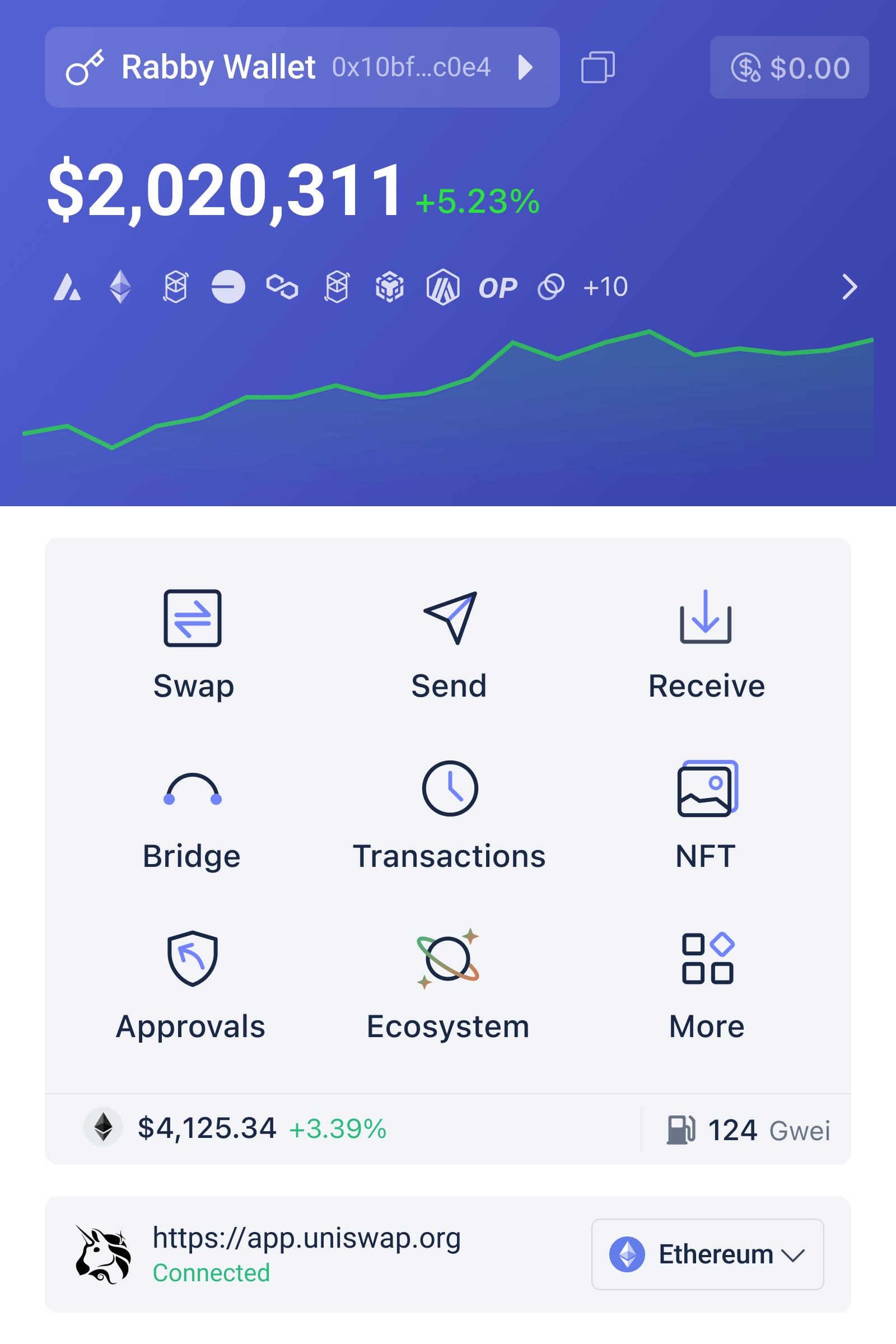
This is where transaction-aware browser wallets can provide practical value. When preparing to download and install the rabby extension, users should obtain software through a source they can verify and confirm that the browser extension matches the intended product. After installation, the wallet should be treated as an inspection tool, not as an automatic substitute for judgment. Before signing, review the network, destination or spender, token, amount, and requested permissions. If the request is difficult to interpret, pause rather than approving merely to make a page proceed.
Wallet warnings are useful signals, but they have limits. Automated systems can identify suspicious patterns, simulate some transaction outcomes, or flag risky contracts, yet they cannot guarantee that an evolving protocol will remain safe. A legitimate application may produce a warning because its contract is complex; a malicious application may imitate a familiar interface. The sound approach is layered: use wallet alerts, reduce unnecessary allowances, separate long-term holdings from experimental funds, and verify the application domain and contract context independently.
A practical approval-management routine
Approval hygiene works best as a routine rather than a reaction after a scare. Before interacting with a new protocol, decide whether the expected convenience justifies the requested allowance. A limited approval can reduce potential exposure, although it may require another transaction later. An unlimited approval saves gas and time, but it creates a broader and potentially longer-lived permission. Neither choice is universally correct; the appropriate choice depends on the token’s value, the protocol’s maturity, expected usage, and the user’s ability to monitor the position.
After using a protocol, review approvals on the same chain. Remove permissions for applications that were used once, abandoned, migrated, or are no longer understood. For active protocols, reassess periodically rather than revoking mechanically. If a wallet contains substantial assets, consider separating activities across addresses: one for long-term holdings, another for routine DeFi, and perhaps a smaller account for unfamiliar experiments. This does not eliminate smart-contract or phishing risk, but it limits the blast radius of a mistake.
Approval management should also be coordinated with operational security. Never enter a recovery phrase into a website, extension prompt, form, or support chat. Treat unexpected signature requests as potentially dangerous even when they do not display a familiar token approval. Verify the network before sending assets or revoking permissions, and keep enough native currency available for essential security actions on networks where valuable approvals exist. In the United States, where users may move among many Ethereum-compatible networks through a single browser, this chain-by-chain discipline is especially important.
The most useful priority rule is simple: first protect valuable assets from unnecessary exposure, then remove stale permissions, then investigate confusing or unexpected requests. Do not assume that a zero token balance makes an approval irrelevant. Future deposits may become exposed. Conversely, do not assume that every old approval is an emergency; risk depends on the token, spender, contract behavior, balance, and chain. A measured review is more effective than indiscriminate clicking.
What to watch as wallets become more multi-chain
The likely direction of wallet design is toward more contextual permission management: clearer explanations, chain-specific risk views, simulations, and prompts that distinguish a one-time action from a persistent authorization. If these tools become more reliable, they could reduce the gap between what a smart contract technically requests and what a human user understands. The unresolved question is whether better interfaces will encourage better decisions or merely make complex approvals feel routine.
That uncertainty matters because security tools are part of a larger human system. A warning that appears too often may be ignored; a simplified screen may hide meaningful details; a simulation may not capture every future contract state. Users should therefore watch not only for new wallet features, but also for whether those features explain authority in plain language and preserve access to the underlying details. Transparency is more valuable than reassurance.
Frequently Asked Questions
Does revoking a token approval return funds that were already stolen?
No. Revocation changes future authorization. It cannot reverse a transfer that has already been confirmed on-chain. If a suspicious approval may have been used, move remaining assets to a safer address when appropriate, preserve transaction details, and avoid interacting further with the suspect application.
Is an unlimited approval always unsafe?
No. It is a broader permission, not automatic evidence of fraud. Unlimited approvals can reduce repeated approval transactions, but they also increase the maximum amount that the approved spender may be able to access for that token on that chain. The decision should reflect the protocol, asset value, usage pattern, and monitoring capacity.
Why must approvals be checked separately across networks?
Because each blockchain maintains its own contract state. The same wallet address can have different balances and allowances on Ethereum, Base, Arbitrum, or another network. A clean review on one chain does not establish that permissions are safe everywhere else.
The sharper conclusion is that a wallet is not merely a vault for private keys. In DeFi, it is also a registry of delegated authorities. Security improves when users can see those authorities, understand their boundaries, and remove the ones that no longer serve a purpose. The routine may feel less exciting than chasing the next protocol, but it addresses a quieter and more durable source of risk: permissions that outlive attention.