By the time I pulled up to the departure curb at Hartsfield–Jackson, I thought I was living a pretty typical life in a troubled but functioning marriage. My husband, Quasi, looked like every magazine’s idea of success: tailored suit, polished shoes, expensive watch, confident smile. To anyone watching, we were the picture of a strong couple seeing Dad off on another important business trip.
He hugged me with that practiced charm and murmured, “Three days, tops. Big meeting in Chicago. I’ll be back before you miss me.” Then he bent down to our six-year-old son.
“You take good care of Mama while I’m gone, all right, champ?”
Kenzo’s face didn’t light up. He just stared at his father in a way I couldn’t quite read.
A few minutes later, Quasi vanished into the security line. The terminal swallowed him up. The world went back to normal: rolling suitcases, announcements over the speakers, people rushing past with coffee cups.
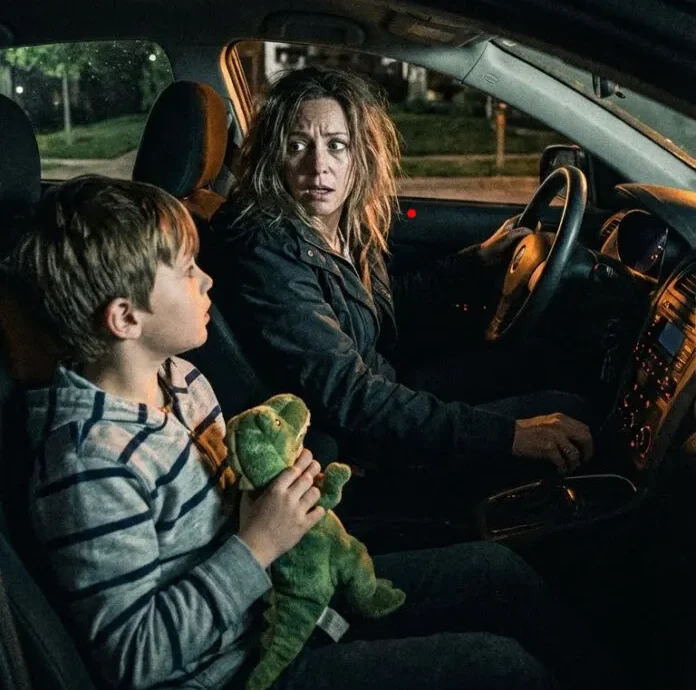
I took a breath, reached for my keys, and felt a small hand clamp down on my wrist.
“Mama… don’t drive back home,” Kenzo whispered. His voice was thin and shaking. “This morning I heard Daddy say he’s planning something bad. Really bad. You have to believe me this time.”
Everything inside me went very still.
Kenzo wasn’t the kind of child who made things up. He didn’t look for drama. If anything, he was too serious, too observant for his age. And the fear in his eyes that night under the harsh airport lights was not the fear of a child afraid of the dark.
It was the fear of a child who had seen something he did not understand, but knew was dangerous.
Right there, my life as I knew it began to crack.
The Red Flags I Didn’t Want To See
Looking back now, I can see how many signs I brushed aside as “stress” or “normal marriage problems.” I think many people in a toxic marriage do the same. You tell yourself it isn’t that bad. You explain away the unease.
Quasi never shouted. He never left a mark. But he controlled everything quietly.
The house in Buckhead? In his name only.
The car? His name.
My inheritance from my mother? Combined into “our” accounts that he managed.
“It’s just easier on taxes, babe,” he’d say when I asked questions. “Trust me. I handle everything.”
He discouraged me from working.
“You don’t need to,” he insisted. “You’re taken care of.”
He was always on the phone in his home office with the door closed. When I accidentally overheard snippets—“It has to look natural,” “No risk or it’s off”—I told myself it was some complicated business deal I couldn’t understand.
And then there was Kenzo.
Weeks before that night at the airport, my son told me he kept seeing the same unfamiliar car parked near our house late at night. I brushed it off as coincidence. Later he said he heard his dad talking about “solving a problem for good.”
I told him not to listen to grown-up conversations, that he must have misunderstood.
“This time, I believe you, Kenzo,” I said at the airport, kneeling so we were eye to eye. “Tell me exactly what you heard.”
He swallowed hard.
“This morning, really early, I woke up and went to get water. Daddy was in his office. He was on the phone. He said that tonight, when we were sleeping, something bad was going to happen, and he needed to be far away when it did. He said some people were going to take care of it so he could be free. He said ‘no mistakes this time.’”
My mouth went dry.
“I asked if you’re sure,” I remember. “Are you absolutely sure, baby?”
His little head bobbed.
“It wasn’t Daddy’s normal voice,” he whispered. “It sounded… scary.”
I thought about the recent increase in my life insurance policy, something my father had insisted on years ago “just in case.” I thought about how hard Quasi had pushed to be the sole beneficiary. I thought about how he seemed jumpy lately, how often he checked banking apps on his phone.
And for the first time, I allowed myself to consider that my own husband’s secret life might not just be messy.
It might be dangerous.
“Okay,” I said finally. My voice shook, but my decision did not. “We are not going home. Not until we understand what’s going on.”
Watching Our Home From The Dark
I walked Kenzo back to the parking deck, buckled him into his car seat, and slid behind the wheel. My hands trembled so much it took me three tries to start the engine.
“Mama?” came that small voice from the back.
“Yes, love.”
“Thank you for believing me.”
I glanced at him in the rearview mirror. He sat hugging his dinosaur backpack like a shield.
“I should have believed you sooner,” I said quietly. “But I believe you now. And we’re going to be smart about this.”
Instead of driving into our driveway, I circled the neighborhood and parked on a parallel street where we could see our house through a gap in the trees. I turned off the engine and lights. We sat in the dark like two people watching their own lives from the outside.
The porch light was on. The front windows glowed softly. From a distance, our home looked peaceful. Safe.
Nothing about my heart felt safe.
Minutes crawled by. Doubt started tapping on my shoulder. I felt ridiculous, hiding on a side street with my child, half convinced my husband of eight years was planning something terrible.
“What if I’m wrong?” I thought. “What if Kenzo misunderstood? What if this is all stress and imagination?”
Then my son spoke again.
“Mama. Look.”
He pointed out the window, toward the entrance of our street.
A dark van with heavily tinted windows eased into view. No logo, no license plate on the front. It moved slowly, too slowly to be someone just passing through. It stopped directly in front of our house.
Two men stepped out wearing dark clothing. No toolboxes, no packages, no reason to be there.
My breath caught.
If they’d pulled out crowbars or tried to break in, I could have told myself it was a burglary. But instead, one of them reached calmly into his pocket and took out a small object.
He walked up to our front door.
And unlocked it.
“What… how do they have a key?” I whispered, more to myself than to Kenzo.
“Mama, I told you,” he said, voice shaking. “Daddy said people were coming.”
Only three people had keys to that house: me, our housecleaner, and Quasi. No one else.
The men went inside without turning on the lights. Through the curtains, I could see faint beams of flashlights moving.
We waited. The air felt thick, heavy. A sharp chemical smell drifted toward us on the night breeze, but my mind refused to name it.
Then I saw it: a flicker of orange in the front window. Then another. Then more.
“Mama, there’s a light,” Kenzo choked. “Why is there fire?”
Flames grew inside the home where we had eaten breakfast that morning. Smoke curled upward. The heat soon blew out a downstairs window, sending sparks into the night.
Somewhere, a neighbor shouted. An alarm began wailing.
The van sped away just before the first fire engine turned onto our street.
I remember sliding down beside the car, my legs no longer holding me. Kenzo clung to me, sobbing. The house we had lived in, the nursery I once painted, his superhero curtains—it all vanished behind smoke and flames.
My phone buzzed.
A text from Quasi lit the screen:
“Hey babe, just landed. Hope you and Kenzo are sleeping well. Love you both. See you soon.”
Every word felt like ice.
He was in another state, establishing his perfect alibi, while strangers used our keys to destroy the place where we should have been sleeping.
If Kenzo hadn’t spoken up… if I had brushed him off again…
I pulled my son into my arms and held on like I would never let go.
“We’re alive because of you,” I whispered into his hair. “You saved us.”
For a long time, we just sat there hearing sirens, watching firefighters work, feeling our old life burn down in front of us.
Then I remembered a name and a small card my father had once pressed into my hand.
Part 2
The Lawyer My Father Left Behind
Two years before he passed, my father, Langston, was lying in a hospital bed when he called me closer.
“Ayira,” he said, reaching into his bedside drawer, “I don’t trust that husband of yours. I hope I’m wrong. But if one day you ever feel you’re in real trouble, call this person.”
He handed me a card:
“Zunara Okafor, Attorney at Law.”
At the time, I was offended. Quasi had been attentive, generous, always ready with flowers and soft words. I tucked the card into my wallet and never looked at it again.
Until that night in the car, watching smoke rise over the place I called home.
With shaking hands, I dialed the number.
“Hello, Attorney Okafor speaking,” came a steady voice.
“Ms. Okafor,” I said, my voice breaking, “my name is Ayira. My father was Langston Vance. He told me to call you if I ever needed real help. My house just burned down. My son and I are safe, but I think my husband planned it.”
There was a pause. Then:
“Where are you?” she asked. “Are you able to drive?”
“Yes.”
“Write this address down,” she said. “Come now. Bring your son.”
Her office was in an older brick building that most people would walk past without noticing. No glossy sign, just a small plaque: “Okafor Legal Counsel.”
When she opened the door, I saw a woman in her sixties with gray locs pulled back, reading glasses hanging on a chain. She looked like someone who had seen a lot in life—and survived it.
“Come in,” she said briskly. “Let the boy sleep on that sofa. Then tell me everything.”
So I did. I told her about the airport. Kenzo’s warning. The strange van. The key. The fire. The text from Quasi.
She listened without interrupting, fingers lightly steepled, her expression unreadable.
When I finished, she nodded slowly.
“Your father was right to be cautious,” she said. “He asked me to look into your husband three years ago. Quietly.”
She unlocked a cabinet and pulled out a thick file.
“Quasi is not just financially reckless,” she explained. “He is deeply in debt to some very dangerous people. Gambling, risky ventures, loans from unregulated sources. For two years, he has been patching holes with your inheritance and joint assets.”
My stomach churned.
“And now that the money’s gone,” she continued, “he’s looking at that life insurance policy your father insisted you take out. If you were to have an ‘accident,’ your husband would receive enough to clear his debts and start over.”
The word “accident” hung between us.
“But we survived,” I said. “He doesn’t know that yet.”
“That,” she replied, “is your advantage.”
Letting Him Play The Grieving Husband
Attorney Okafor—she insisted I call her Zunara—offered us a room in the back of her office to sleep for a few hours. When we woke, she turned on the morning news.
Massive Fire Destroys Buckhead Home. Family’s Fate Uncertain.
The camera panned over blackened beams and charred brick that had once been our house. Then they cut to footage of Quasi arriving at the scene.
He stumbled out of a car, clutching his chest, shouting, “My wife, my son! Please tell me they weren’t inside!”
He looked devastated. He put on a performance that would have earned him sympathy from the entire city. He asked the fire chief if they’d found “the bodies,” then covered his face with his hands.
Kenzo watched from the sofa, eyes narrowed.
“He’s pretending,” my son whispered. “He’s pretending he’s sad.”
“He is,” I agreed quietly.
“Let him keep pretending,” said Zunara as she switched off the TV. “He needs to feel like he’s in control. Meanwhile, we gather proof.”
She had an ally at the police department, a detective known for being straight-arrow. But before involving him, she wanted something concrete linking Quasi to the men in that van.
“Do you know the combination to his home office safe?” she asked.
I nodded. “His birthday. He uses it for everything.”
That night, after Quasi finished giving interviews and was escorted to a hotel, we went back.
Not through the front, where cameras and curious neighbors still clustered, but through a side entrance and over a low wall that only someone who knew the development’s shortcuts would know.
The back of the house was damaged but passable. My heart ached as we stepped through the scorched kitchen. Cabinets hung open, appliances melted, memories turned to ash. We didn’t have time to grieve.
Upstairs, miraculously, Quasi’s office had escaped the worst of the heat. The painting that normally covered his wall safe was gone, burned away, leaving the steel door visible.
My hands shook as I punched in his birth date.
The safe opened with a soft click.
Inside: stacks of cash, folders, a small notebook, and a cheap-looking phone with no labels. Kenzo tugged my sleeve.
“Mama, there’s more,” he whispered, pointing to a loose floorboard.
Under it, we found another phone and a thicker black notebook.
We shoved everything into a backpack.
We were almost out the door when we heard footsteps on the stairs.
“Somebody was here,” a male voice said. “Safe’s open.”
Another answered, “Cops don’t steal cash. And look—those are kid-sized footprints.”
They were the same voices from that night.
We froze in the office closet, barely breathing, as flashlights swept past.
“We’re calling the boss,” one of them muttered. “He needs to know we’ve got a problem.”
Moments later, a bloodcurdling scream echoed from outside.
“Who’s there?” one of the men shouted, bolting downstairs.
We didn’t wait. As soon as the room cleared, we scrambled out, raced down the stairs, and slipped through the back door.
At the back wall, we found the source of the scream: Attorney Okafor, standing in the shadows, looking almost amused.
“Sometimes a distraction is all you need,” she said. “Did you get it?”
I held up the backpack. “We got it all.”
The Notebook That Explained Everything
Back at the office, we emptied the backpack on her desk. Cash, documents, two phones, the black notebook.
We started with the notebook.
Inside, in Quasi’s neat handwriting, was a record of every debt he owed—names, dates, amounts, and deadlines. The last pages were different.
“Final plan,” one entry read. “Ayira’s insurance. Requires ‘accidental’ event. Must be out of state. Contact M. for arrangements.”
Next to it were notes: a fee, a date, and initials that matched one of the voices we’d heard in the burned house.
The phones held even more. With some help from a trusted tech, we accessed message threads between Quasi and a contact saved only as “M.”
“Needs to look like an accident. House is best,” one message said.
“Traveling that night, solid alibi,” another read.
And then, the one that made me go cold:
“What about the boy?” came a message from M.
“We can’t leave anyone behind,” Quasi had typed back.
No kindness. No hesitation. Our child, dismissed with a single line in a secret conversation.
“Is this enough?” I asked, my voice shaking.
“It’s more than enough,” said Zunara. “But we’re going to be careful about who we give it to.”
She called Detective Hightower, a seasoned investigator with a reputation for doing things by the book. When he heard there was proof of a planned “accidental” fire tied to a large insurance policy, he agreed to meet immediately.
His reaction to the evidence matched ours: quiet disbelief, then grim resolve.
“We’ll do this right,” he said. “No shortcuts. No leaks.”
That night, my phone buzzed again. Dozens of missed calls and messages from Quasi finally came through.
“Where are you, babe? Please tell me you’re okay.”
“The police said they didn’t find… anything. Are you hurt?”
“I know you took things from the safe. We need to talk. You don’t understand what you’re doing.”
“The mask is slipping,” said Zunara. “Answer him. Calmly. Invite him to talk. Somewhere public.”
My fingers shook as I typed:
“Centennial Olympic Park. Near the fountain. Tomorrow at 10. Come alone.”
His reply came almost instantly.
“I’ll be there. We can fix this.”
Part 3
The Meeting In The Park
The next morning, I sat on a bench near the fountain downtown, wearing a simple jacket with a small microphone hidden inside. Detective Hightower’s team was scattered around us disguised as tourists, joggers, families.
Kenzo stayed at the office with Auntie Z (as he now called her), watching a feed on a small monitor.
At 10:00 a.m. on the dot, Quasi appeared.
He looked rumpled, unshaven, exhausted. For a fleeting second, I almost saw the man I once believed in.
Then I remembered the messages in that notebook.
“Ayira,” he said, rushing toward me. “Thank God you’re okay. I thought—”
“Don’t,” I said, holding up a hand. “Don’t touch me.”
His eyes flicked around, assessing the park. He tried to mask his tension with a wounded expression.
“We need to talk somewhere private,” he said.
“We’ll talk right here,” I answered. “Why did you arrange for our house to be set on fire while Kenzo and I were supposed to be asleep?”
His jaw clenched.
“You don’t know what you’re saying. You’re in shock.”
“I saw them,” I said. “The van. The keys you gave them. I watched from the street while our home burned.”
He swallowed hard.
“You weren’t supposed to be there,” he muttered, more to himself than to me.
“And what does that mean?” I asked. “That it was an unfortunate scheduling error?”
His temper flared.
“You have no idea the kind of trouble I’m in,” he snapped. “They were coming for me. For you. For the kid. I was trying to fix it.”
“By putting us in danger?” I said quietly. “By hoping an insurance payout would save you?”
His eyes narrowed. The charm dropped.
“You took things that don’t belong to you,” he said in a low voice. “The notebook. The phones. You’re going to give them back. Right now.”
“And if I don’t?” I asked.
“Then you and that boy will never be safe,” he hissed. “Not from me, not from the people I owe.”
Somewhere behind us, a stroller rolled by. A jogger tied his shoe. A vendor sold pretzels.
“Quasi,” I said steadily, “I may not be safe right now. But I am done being your victim.”
That’s when Detective Hightower stepped forward and flashed his badge.
“Quasi Vance, you’re under arrest.”
Other officers closed in. For a moment, I thought my husband might surrender.
Instead, he bolted.
He ran a few yards, then turned and grabbed me, trying to pull me between himself and the officers. My body tensed, but I refused to scream. I refused to give him that power again.
“Let her go,” Hightower ordered, moving slowly closer. “This is over.”
It all happened in seconds. A trained officer acted from a distance, and Quasi dropped his hold on me in surprise and pain. Officers moved in and restrained him carefully, preventing the situation from escalating further.
Even then, as they led him away, he shouted, “You’ll regret this, Ayira! You’ll see what you’ve done!”
But for the first time since I married him, his threats sounded empty.
After The Ashes: Building A Different Life
The legal process that followed was long but straightforward. The notebook, the messages, the burner phones, my testimony, and eventually the cooperation of the two men he hired all painted a clear picture of what had been planned.
In careful, calm language, the prosecutor laid it out: a financially desperate man who quietly exploited his wife’s resources, then tried to profit from a “tragic accident” that would solve all his problems.
In the end, Quasi was convicted on multiple counts, including conspiracy, arson under dangerous circumstances, and attempted harm. The sentence was long. I did not attend the final hearing. I let the justice system do what it was designed to do and chose not to give him any more space in my life.
In the months that followed, I rebuilt from the ground up.
The house was gone, but the insurance policy on the property—not the one on my life—provided enough to rent a small place and start over. With help from Zunara, I untangled my finances, reclaimed what could be reclaimed, and legally secured my and Kenzo’s future.
Kenzo began therapy with a gentle counselor experienced in helping children through trauma. At first, he woke up from nightmares about fire and strangers at the door. Slowly, with time, talking, and patience, those nightmares came less often.
One night, months later, he asked me, “Mama… is it okay if I miss the good parts of Daddy?”
His honesty nearly broke my heart.
“Yes,” I said, pulling him close. “It’s okay to remember the times that felt real and still be angry about what he did. Your feelings don’t have to be just one thing.”
He thought about that, then whispered, “I saved us, right?”
“Yes, baby,” I said. “You did. You are the reason we’re here.”
My own healing came on a different path.
I went back to work—something Quasi had discouraged for years. I joined a nonprofit that supports women leaving unsafe relationships. Sitting across from those women, I recognized the same confusion I’d once carried: “Is it really that bad?” “Am I overreacting?” “What if no one believes me?”
In those conversations, I could look them in the eye and say, “You are not crazy. You are not alone. And you deserve to be safe.”
With encouragement from Auntie Z, I eventually went back to school, earned my law degree, and joined her practice. Our focus became family law and helping survivors of controlling, harmful relationships find legal paths to safety.
The work has weight to it. But it also has meaning.
Part 4
Five Years Later: The Life We Chose
This morning, five years after that night at the airport, I sit on the front porch of a modest house in Decatur, coffee mug warming my hands. The backyard is full of the sounds of a quiet neighborhood: a dog barking two doors down, kids riding bikes, a lawn mower humming somewhere.
Inside, Kenzo—now eleven—is bent over his homework at the kitchen table. His backpack is heavier these days, full of science projects and books about engineering.
“Mom, can I go to Malik’s after lunch?” he calls.
“Sure,” I answer. “Be back by six.”
He appears at the doorway, taller now, still with those watchful eyes, but they’re no longer filled with fear.
“Hey, Mom?”
“Yes?”
“Are you happy?”
I think about how to answer that. Not glossing over the pain, not ignoring the scars, but telling the truth.
“Yes,” I say. “I am. Not every day, not every minute. But overall? Yes. I’m happy.”
He nods thoughtfully.
“I thought maybe you’d stay sad forever,” he admits.
“I was very sad for a long time,” I say. “And I still get sad sometimes when I remember. But we’re safe. We have a home we chose. We’ve got good people around us. And I get to help other families now. That’s a kind of happiness I didn’t even know existed before.”
He is quiet for a moment.
“Do you… forgive Dad?” he asks.
I take a breath.
“I don’t know if forgiveness is the right word,” I say slowly. “I don’t excuse what he did. I don’t forget it. But I also don’t let it control my life anymore. I put it down. I think that’s as close to forgiveness as I need to get.”
He seems satisfied with that answer.
“I miss the stories he used to tell sometimes,” he says. “But I don’t miss feeling scared.”
“That makes sense,” I tell him. “You’re allowed to feel both.”
He smiles and heads back inside.
Later, when I tuck him into bed (even though he insists he’s too old for that now), he gives me a quick hug.
“Thanks for believing me,” he murmurs.
“I always will,” I promise. “That’s my job.”
When I turn out the light and close his door, I stand in the hallway for a moment, listening to the quiet.
Five years ago, I thought losing the house meant losing everything.
Now I know the truth: the only thing we truly lost was an illusion.
What we gained was far more real—freedom, safety, and a life built not on secrets and control, but on trust, respect, and the courage of a little boy who spoke up when it mattered most.