My Mother-in-Law Laughed When I Entered Divorce Court Alone—But My Husband’s Three Lawyers Had No Idea Who I Really Was
My mother-in-law laughed the moment I walked into the divorce courtroom without an attorney.
My husband sat across the aisle with three expensive lawyers, looking as though he had already won. His parents were beside him, smiling confidently, certain I would leave with nothing after seven years of marriage.
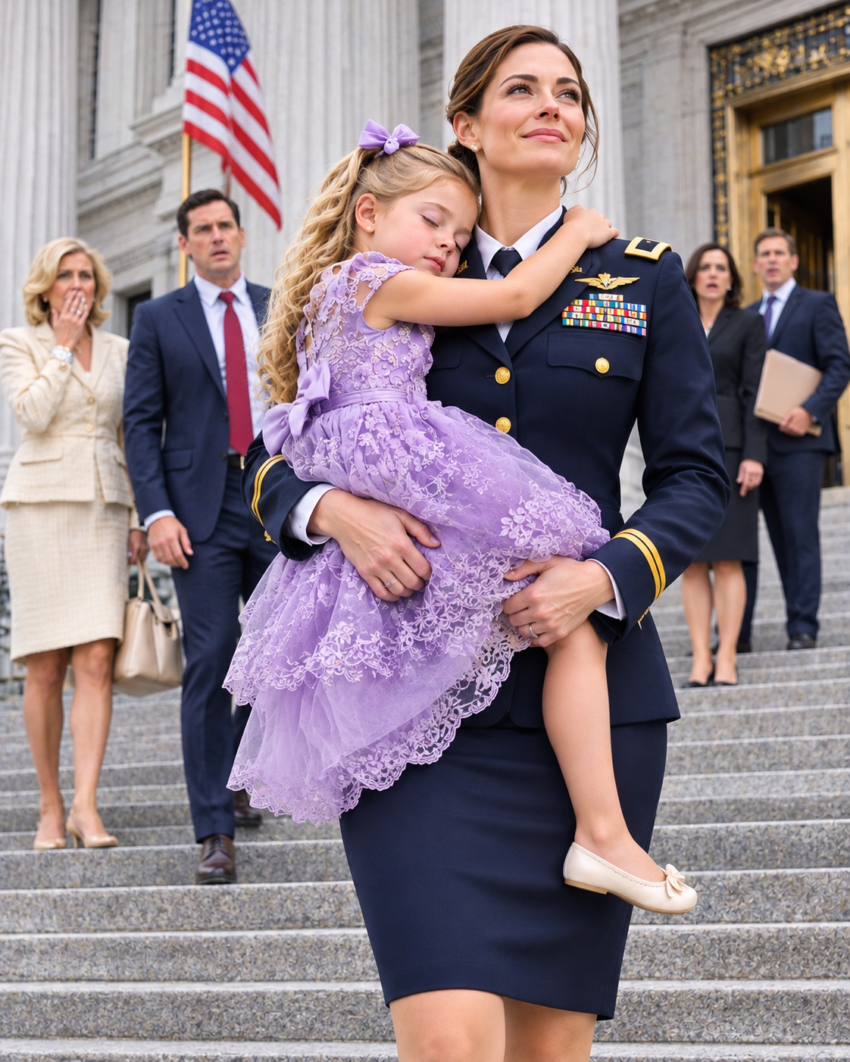
What none of them knew was that I had once served as a captain and attorney in the United States Army.
And when I stood before the judge, opened my leather briefcase, and calmly announced, “Your Honor, I never signed that agreement,” the smiles began to disappear.
Because the documents in my folder weren’t simply going to change the outcome of our divorce.
They were about to reveal who had truly built my husband’s multimillion-dollar company.
The Woman They Thought Was Helpless
My name is Evelyn Hartwell. I was thirty-six years old when my marriage to Bradley Whitcomb ended in a courtroom in Philadelphia, Pennsylvania.
For seven years, I had been the wife everyone expected me to be.
I organized Bradley’s business dinners, handled his travel arrangements, managed our household, and helped care for his aging parents whenever they needed me.
His mother, Patricia Whitcomb, never missed an opportunity to remind me how fortunate I was.
“Bradley provides everything, Evelyn. The least you can do is make his life comfortable.”
I usually smiled and changed the subject.
His father, Leonard, wasn’t much different.
“Some women would give anything to marry into this family,” he once told me over Thanksgiving dinner.
They saw a quiet woman who preferred simple clothes and rarely discussed her accomplishments.
They never wondered why I understood complicated financial documents or why Bradley occasionally asked me to review his business contracts.
Most importantly, they never asked what I had done before becoming Mrs. Whitcomb.
I had been Captain Evelyn Mercer, a military attorney who spent years handling complex legal matters, reviewing evidence, and presenting arguments before military courts.
I loved that work.
But when Bradley proposed, he promised we would build a peaceful life together. I eventually stepped away from active military service, believing that marriage meant choosing a different kind of future.
I never regretted wanting a family.
What I regretted was allowing the people around me to believe that choosing a quieter life meant I had nothing valuable to offer.
The Divorce Papers on the Breakfast Table
Three weeks before our court appearance, Bradley placed a thick envelope beside my coffee.
“I want a divorce, Evelyn. Everything is already prepared. Just sign the papers.”
I stared at him.
“After seven years, that’s how you’re going to tell me?”
He checked his phone.
“We’ve grown apart. There’s no reason to make this complicated.”
Inside the envelope was a proposed property settlement.
According to the document, Bradley owned nearly everything, including our home, investment accounts, and his technology company, Whitcomb Digital Systems.
I would receive a modest payment and keep my personal belongings.
Nothing more.
I read the agreement twice before looking up.
“You’re claiming I contributed nothing to this marriage?”
Bradley sighed impatiently.
“You handled the house, Evelyn. I built the business. Those are two different things.”
My hands tightened around the papers.
“I helped you when the company was nothing more than an idea. I managed your schedules, met your investors, and stayed awake helping you prepare presentations.”
He shrugged.
“You supported me as my wife. That doesn’t make you a business owner.”
I could have argued for hours.
Instead, I closed the folder.
“I’ll review everything before making a decision.”
Bradley smiled as though I had finally accepted his terms.
He had no idea that I had already noticed several serious problems in the paperwork.
And one of them involved a signature I had never written.
The Signature That Changed Everything
Two days later, I received another copy of the settlement from Bradley’s attorney, Richard Bellamy.
This version contained something the first one hadn’t.
My signature.
According to the accompanying notary certificate, I had signed the agreement on October 14.
There was only one problem.
On October 14, I had been attending a professional conference in Pittsburgh, nearly three hundred miles from Philadelphia.
I still had the hotel confirmation, parking receipts, registration records, and photographs taken during the event.
I examined the signature carefully.
Someone had tried to imitate my handwriting.
They had even copied the unusual way I formed the final letter of my last name.
But they had made a mistake.
I had changed my signature style several years earlier.
The version on the document matched an old signature from a bank form Bradley had kept in his office.
That evening, I opened the locked cabinet containing my personal records.
Inside were contracts, financial statements, investment documents, and copies of correspondence I had preserved throughout our marriage.
I had kept them because my grandfather, a retired federal judge, taught me something when I was young.
“Evelyn, trust people with your heart, but protect important decisions with proper records.”
I had followed that advice long before I met Bradley.
Now those records were about to become more important than I could have imagined.
The Secret Behind His Million-Dollar Company
When Bradley and I married, he wasn’t a successful businessman.
He was a talented software developer with approximately $50,000 in debt and a business idea that no bank wanted to finance.
I believed in him.
More importantly, I had the financial means to help.
My grandfather had left me a substantial inheritance through the Mercer Family Trust.
From that trust, I invested $250,000 into Bradley’s startup.
We signed an agreement establishing the trust as the holder of controlling preferred shares, while Bradley would manage daily operations.
He insisted we keep my involvement private.
“Investors want to see a founder who built something himself,” he explained. “You understand how these things work.”
At the time, I agreed.
I wanted him to succeed.
Over the following years, Whitcomb Digital Systems grew into a thriving technology company.
Bradley appeared in business magazines, attended exclusive conferences, and proudly told people how he had started with nothing.
His parents repeated that story at every family gathering.
“Our son built an empire with his own two hands,” Patricia loved to announce.
I never corrected her.
But I had preserved the original investment agreement, shareholder records, financial transfers, and corporate filings.
When the company began attracting acquisition offers, Bradley quietly attempted to restructure its ownership.
He wanted to eliminate the trust’s controlling rights without telling me.
And according to the documents I uncovered, someone had again signed my name without permission.
That discovery changed everything.
This was no longer simply a disagreement over marital property.
It involved serious questions about corporate ownership and financial disclosures.
A Phone Call I Never Expected
One evening, while I was reviewing the company records, an unfamiliar number appeared on my phone.
The caller introduced herself as Natalie Brooks, a young attorney working at Richard Bellamy’s law firm.
Her voice sounded nervous.
“Mrs. Whitcomb, I need to speak with you about your divorce documents.”
I remained cautious.
“What exactly do you want to discuss?”
There was a long pause.
“I believe certain documents were prepared improperly. I also believe you were never supposed to see the original correspondence.”
We arranged to meet in a quiet coffee shop the following afternoon.
Natalie arrived carrying a small folder.
She explained that she had discovered troubling email exchanges while reviewing the firm’s files.
Some messages appeared to show that Bradley, his father, and Richard Bellamy had discussed obtaining a signed settlement without my actual participation.
Others concerned the company’s ownership structure.
“I couldn’t keep pretending I hadn’t seen it,” Natalie told me.
I looked at her carefully.
“Do you understand what coming forward could mean for your career?”
She nodded.
“Yes. But I became an attorney because I believed the truth should matter.”
I thanked her and encouraged her to preserve the information through appropriate legal channels.
Over the next several days, I organized the evidence and prepared the necessary court filings.
I also contacted an independent forensic document examiner and obtained professional guidance concerning the corporate records.
By the morning of our hearing, I knew exactly what I needed to present.
Bradley, however, believed I was coming to surrender.
Three Lawyers and One Confident Husband
The courtroom was already crowded when I arrived.
Bradley sat beside Richard Bellamy and two other attorneys in tailored suits.
Patricia noticed me first.
“Well, look who finally arrived,” she whispered loudly. “And she couldn’t even afford a lawyer.”
Leonard leaned toward her.
“Bradley told us she wouldn’t stand a chance.”
I heard every word.
I simply placed my briefcase on the table and took my seat.
Judge Rebecca Holloway entered a few minutes later.
After reviewing the case, she looked directly at me.
“Mrs. Whitcomb, I understand you’re representing yourself today. Is that correct?”
“Yes, Your Honor.”
“You understand that you have the right to retain an attorney?”
“I do, Your Honor.”
Richard Bellamy immediately stood.
“Your Honor, my client hopes to resolve this matter efficiently. We believe the property settlement has already been executed.”
I looked toward him.
“I disagree.”
He gave a dismissive smile.
“Mrs. Whitcomb may not understand the legal significance of the documents she received.”
For the first time that morning, I smiled.
“Mr. Bellamy, I understand them perfectly.”
Judge Holloway turned toward me.
“Then please explain your objection.”
I opened my briefcase.
“Your Honor, the agreement submitted by my husband’s legal team contains a signature represented as mine. I never signed that document.”
The room became noticeably quieter.
The First Piece of Evidence
Richard Bellamy rose immediately.
“Objection, Your Honor. Mrs. Whitcomb is making an unsupported accusation.”
Judge Holloway raised her hand.
“Mr. Bellamy, allow her to explain the basis for her statement.”
I removed the conference records from my folder.
“The settlement was supposedly signed and notarized in Philadelphia on October 14. On that date, I was attending a professional conference in Pittsburgh.”
I presented my registration confirmation, hotel receipt, photographs, and additional supporting records.
“I also have a forensic document examiner’s preliminary report identifying significant differences between the disputed signature and my verified signatures.”
Judge Holloway reviewed the documents.
Bradley’s expression began to change.
Patricia stopped whispering.
Richard attempted to challenge the timing and admissibility of the evidence, but the judge directed both sides to address the authentication concerns.
Then she looked at me again.
“Mrs. Whitcomb, do you have anything further?”
“Yes, Your Honor. The disputed settlement is only part of the problem.”
I reached into my briefcase and removed another folder.
This one contained the original investment agreement for Whitcomb Digital Systems.
The Truth About the Company
“Seven years ago,” I began, “my husband established Whitcomb Digital Systems using $250,000 provided by my family’s trust.”
Bradley shifted in his chair.
I continued.
“The investment was documented through a signed shareholder agreement. The Mercer Family Trust received controlling preferred shares, while my husband retained responsibility for daily management.”
Patricia suddenly spoke from the gallery.
“That’s ridiculous! Bradley started that company himself!”
Judge Holloway looked toward her.
“Ma’am, you will remain quiet while this matter is being heard.”
I turned a page.
“The company began in a garage owned by my family. The original capital came from my inheritance, and the ownership agreement was signed by Bradley himself.”
My husband stared at the document.
“Evelyn, where did you get that?”
I met his eyes.
“From the records we both signed.”
He leaned toward Richard and whispered urgently.
I continued explaining how the company had grown and how its corporate structure had changed.
Then I presented records concerning a proposed multimillion-dollar acquisition.
“Your Honor, the restructuring documents submitted during these negotiations include another signature attributed to me. I did not authorize that transaction.”
The judge studied the materials.
“Are you alleging that the company’s ownership information was misrepresented?”
“I’m asking the court to examine the evidence and preserve the disputed assets while the appropriate authorities investigate.”
For several moments, no one spoke.
Then Bradley finally found his voice.
“You told me you trusted me.”
I looked at the man I had once believed I would grow old beside.
“I did trust you, Bradley. But trusting someone doesn’t mean destroying every record of what belongs to you.”
The Witness Nobody Expected
Just as Richard began challenging my evidence, Natalie Brooks stood near the back of the courtroom.
“Your Honor, may I identify myself for the record?”
Judge Holloway looked surprised.
“Please state your name and your connection to this matter.”
“Natalie Brooks. I’m an attorney associated with Mr. Bellamy’s firm. I have information relevant to the authenticity of the disputed documents.”
Richard turned sharply.
“Natalie, sit down.”
She remained standing.
“I believe the court should know that concerns about the signatures were raised internally before today’s hearing.”
The judge instructed her to approach and explain the nature of the information, subject to the applicable evidentiary and confidentiality rules.
Natalie described correspondence and records that had prompted her concerns.
She had also provided relevant information to the appropriate professional authorities.
Richard’s face grew pale.
Leonard stared at the floor.
Bradley looked toward his father, apparently hoping he would say something that could explain what was happening.
But Leonard remained silent.
Judge Holloway carefully reviewed the materials before announcing that the disputed settlement could not be accepted as an uncontested agreement.
She directed that the relevant records be preserved and that the allegations concerning document authenticity and corporate transactions be referred for further examination.
Richard’s objections no longer sounded confident.
For the first time since I had entered the courtroom, Bradley looked genuinely frightened of losing control.
The Woman Behind the Quiet Smile
During a short recess, Bradley approached me in the hallway.
His parents stood several feet behind him.
“Evelyn, we need to talk privately.”
I closed my folder.
“About what?”
He lowered his voice.
“About fixing this before it gets worse.”
I studied his face.
For years, I had looked at him with affection, even when his words made me feel small.
Now I felt something different.
Clarity.
“You had plenty of opportunities to be honest with me.”
He rubbed his forehead.
“I didn’t know you still had all those documents.”
“That’s what worries you? That I kept the records?”
He said nothing.
Patricia stepped forward.
“Evelyn, surely you don’t want to ruin everything Bradley worked for.”
I turned toward her.
“Patricia, I helped build what he worked for. I simply want the truth acknowledged.”
She opened her mouth, then closed it again.
Leonard finally spoke.
“Perhaps we can reach an understanding.”
“We can discuss a lawful and fair resolution through the proper process,” I replied. “But I’m not going to pretend those signatures are mine.”
Bradley looked down.
I picked up my briefcase and returned to the courtroom.
The Decision That Changed My Future
When the hearing resumed, Judge Holloway addressed both parties.
The court declined to enforce the disputed settlement and ordered further proceedings to determine the authenticity of the signatures, the proper division of marital property, and the legal effect of the trust’s corporate interests.
The judge also issued appropriate preservation orders concerning records and assets relevant to the dispute.
The potential misconduct involving the legal documents and company disclosures would be reviewed separately by the proper authorities.
The matter was not finished in a single afternoon.
But Bradley’s plan to walk away with everything had failed.
Over the following months, independent examinations confirmed serious irregularities in the signatures and corporate filings.
The evidence led to additional investigations, and the parties eventually reached a court-approved resolution recognizing the trust’s ownership rights and protecting my financial interests.
Richard Bellamy faced professional disciplinary proceedings concerning his conduct.
Bradley lost the exclusive control he had assumed was his.
As for Patricia and Leonard, they stopped calling me the woman who had contributed nothing.
By the time the divorce was finalized, I had regained something far more important than a financial settlement.
I had regained the confidence I once carried into every courtroom.
Walking Away With My Head Held High
On the afternoon of our final hearing, I stepped outside the courthouse into the cool Philadelphia air.
Bradley stood near the entrance, watching me.
“Evelyn,” he called softly.
I stopped.
“I never knew you were this strong.”
For a moment, I thought about the years we had spent together.
I remembered the young man who had excitedly shown me his first software prototype.
I remembered our wedding, our small apartment, and the nights when we dreamed about building a future together.
Then I remembered every time he dismissed my contribution because I had chosen to support him quietly.
“I was always this person, Bradley,” I answered. “You just stopped seeing me.”
He looked away.
I didn’t wait for another explanation.
I walked down the courthouse steps, carrying the same leather briefcase I had brought on the first day.
A few months later, I began rebuilding my legal career, focusing on helping people understand contracts, financial rights, and the importance of protecting their work.
I no longer needed to prove that I deserved respect.
And I no longer believed that keeping peace required me to remain silent.
For years, Bradley’s family had mistaken my kindness for weakness and my quiet nature for ignorance.
They believed that because I didn’t boast about my accomplishments, I had none.
But the truth had been there all along.
I was never simply the woman standing behind a successful man.
I was a woman who had helped him succeed, who had loved him sincerely, and who had finally learned when to walk away.
And as I stepped into the sunlight that afternoon, I knew one thing with absolute certainty.
My marriage had ended, but my life was opening into a future I could finally choose for myself.
A Message to Every Woman Who Has Ever Been Underestimated
Never allow another person’s inability to recognize your worth to convince you that your contributions are insignificant, because the quiet sacrifices you make can carry more meaning than anyone realizes.
A loving relationship should never require you to abandon your identity, silence your opinions, or forget the dreams and abilities that made you who you were before the relationship began.
Sometimes the strongest response to disrespect is not an argument filled with anger, but a calm decision to stand firmly beside the truth and allow your actions to speak for themselves.
Protecting your financial independence and keeping important records does not mean you expect someone to disappoint you; it means you understand that responsibility and love can exist together.
The people who underestimate you may be surprised when you finally establish boundaries, but their surprise does not mean you have become someone different from the person you always were.
A woman who chooses to care for her home and support her family deserves the same dignity as someone who pursues a demanding professional career, because both paths require dedication and strength.
When a relationship ends, it can feel as though years of effort have disappeared, but the wisdom, experience, and resilience gained during those years remain part of who you are.
You do not need to humiliate someone who treated you unfairly in order to reclaim your confidence, because protecting your peace and choosing a better future can be a powerful answer on their own.
Never confuse being patient with accepting everything, because genuine kindness includes knowing when to speak, when to establish limits, and when to leave a situation that no longer respects your dignity.
And most importantly, remember that the end of one chapter does not mean the end of your story, because sometimes the moment you finally choose yourself becomes the beginning of the life you were always meant to live.